

Buying peptides directly from a manufacturer can look cheaper when you compare the price per vial. If there is no current independent test for the batch, the buyer may also end up paying for testing and for material that cannot be used.
One of the vials we sent to Testides was labelled Tirzepatide 10 mg. The report came back with a photograph of that vial, a chromatogram, and a note at the bottom: “No tirzepatide detected.” We had paid for the sample and paid to have it tested. The failed material stayed out of customer orders, and we absorbed the cost of both.
If we had sold that material without checking it, a customer would have paid us for Tirzepatide and been left to discover the problem. We don't think someone buying from us should also have to fund the first independent check of whether they received what they ordered.
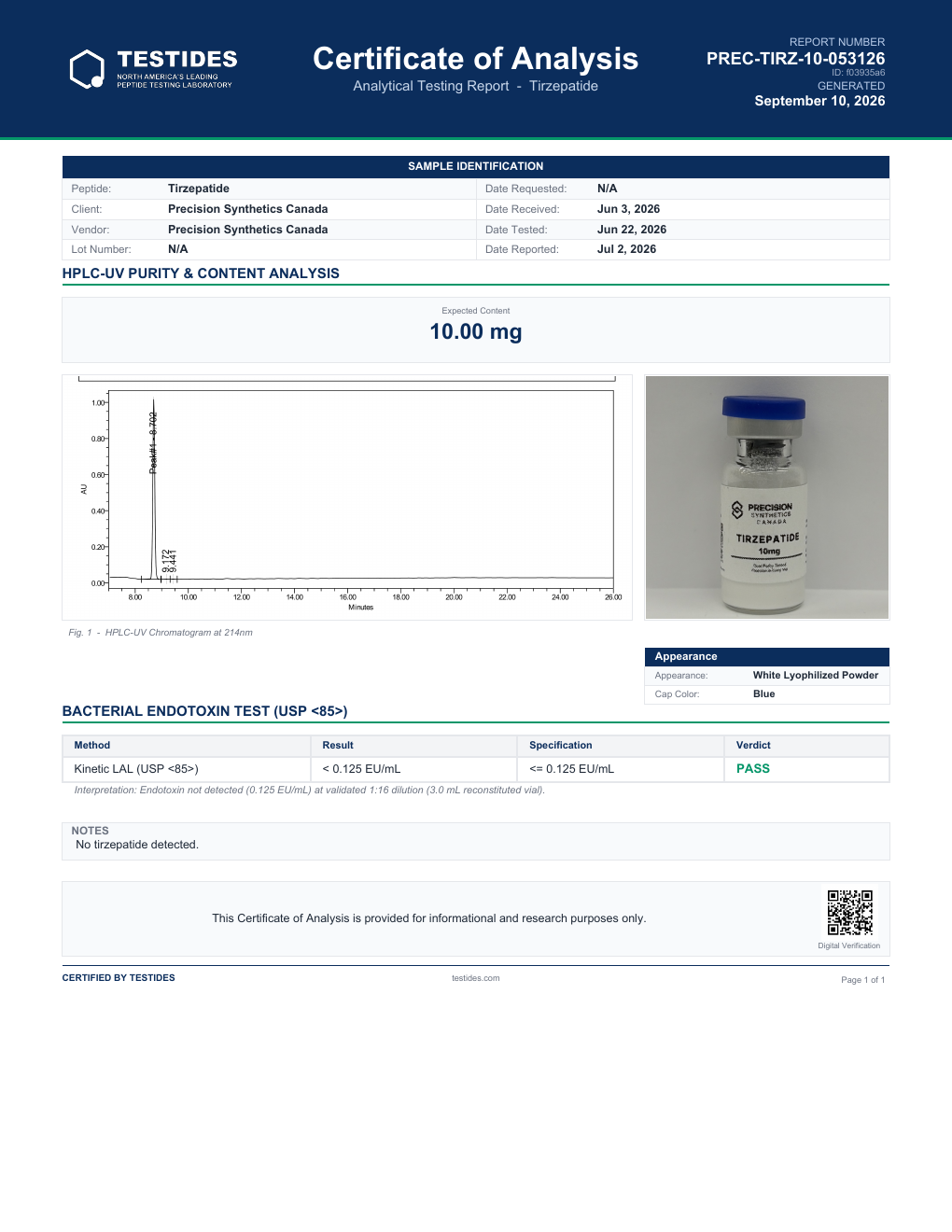
These reports show a cost that is easy to miss when comparing vial prices. We paid for material we could not sell, on top of the testing needed to find that out. A customer should never have to buy that material just so we can recover our spending.
What the other reports found
Testides also examined samples submitted as Tirzepatide 20 mg and Retatrutide 20 mg and 30 mg. The lab could not confirm the expected peptide in those samples either. Its Tirzepatide 20 mg notes describe the detectable composition as consistent with mannitol, a bulking ingredient.
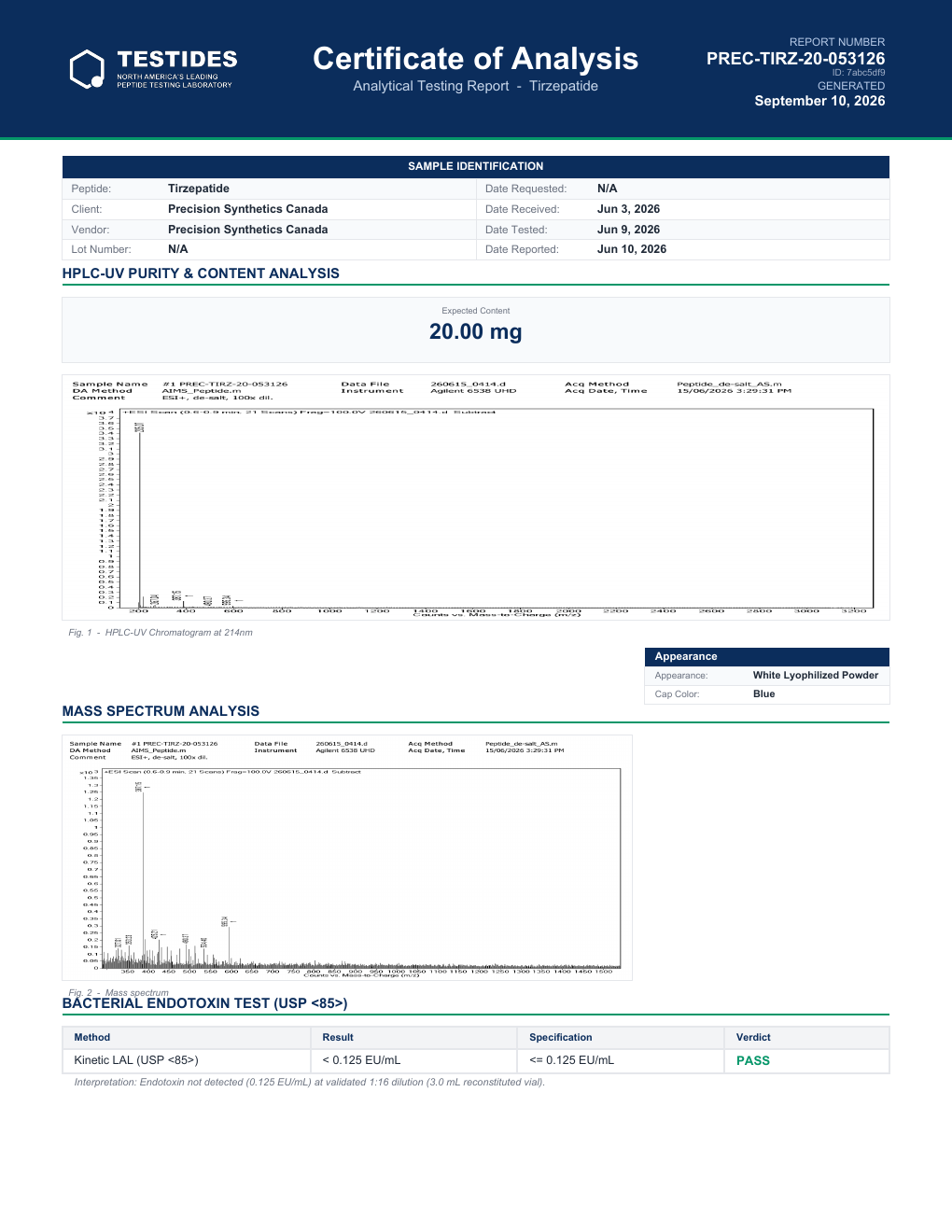
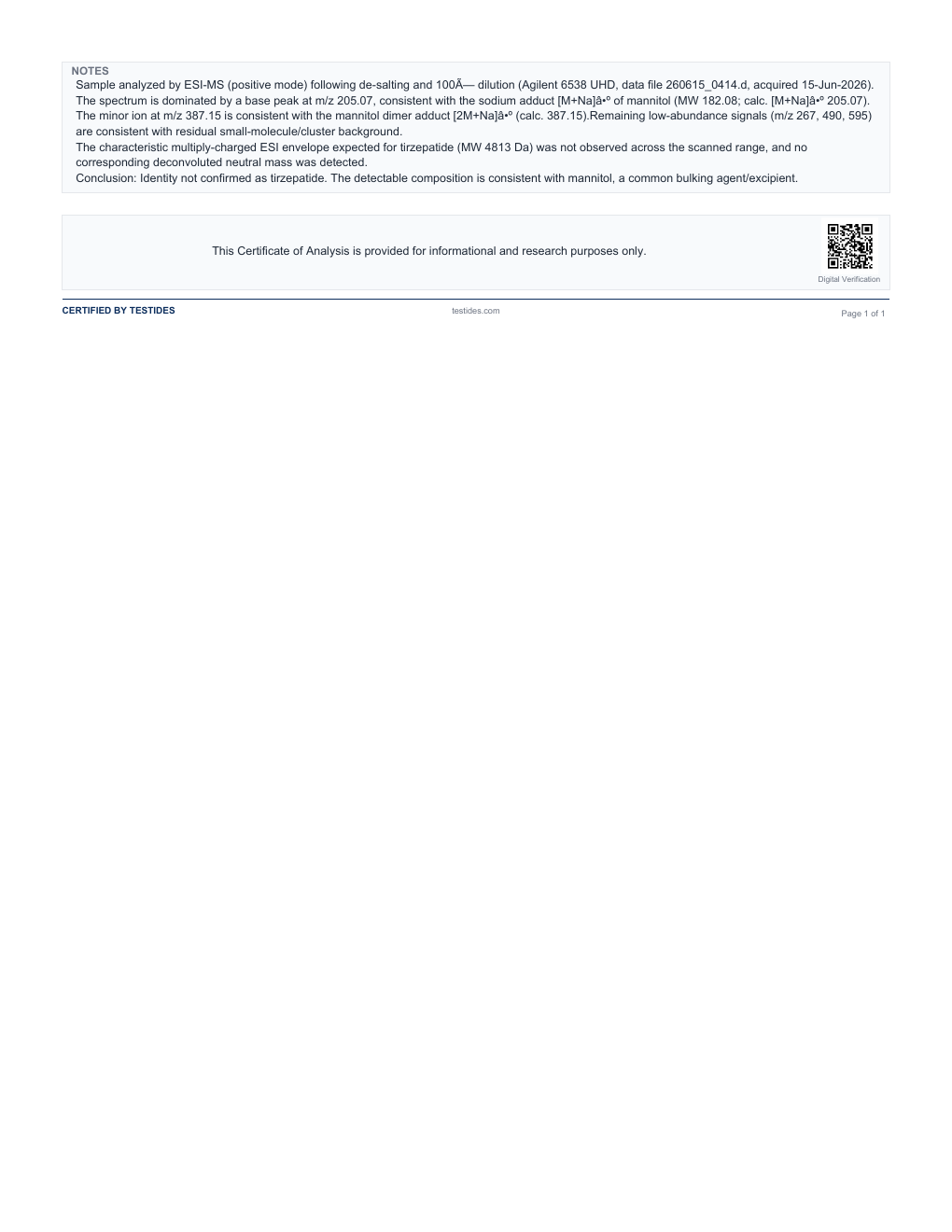
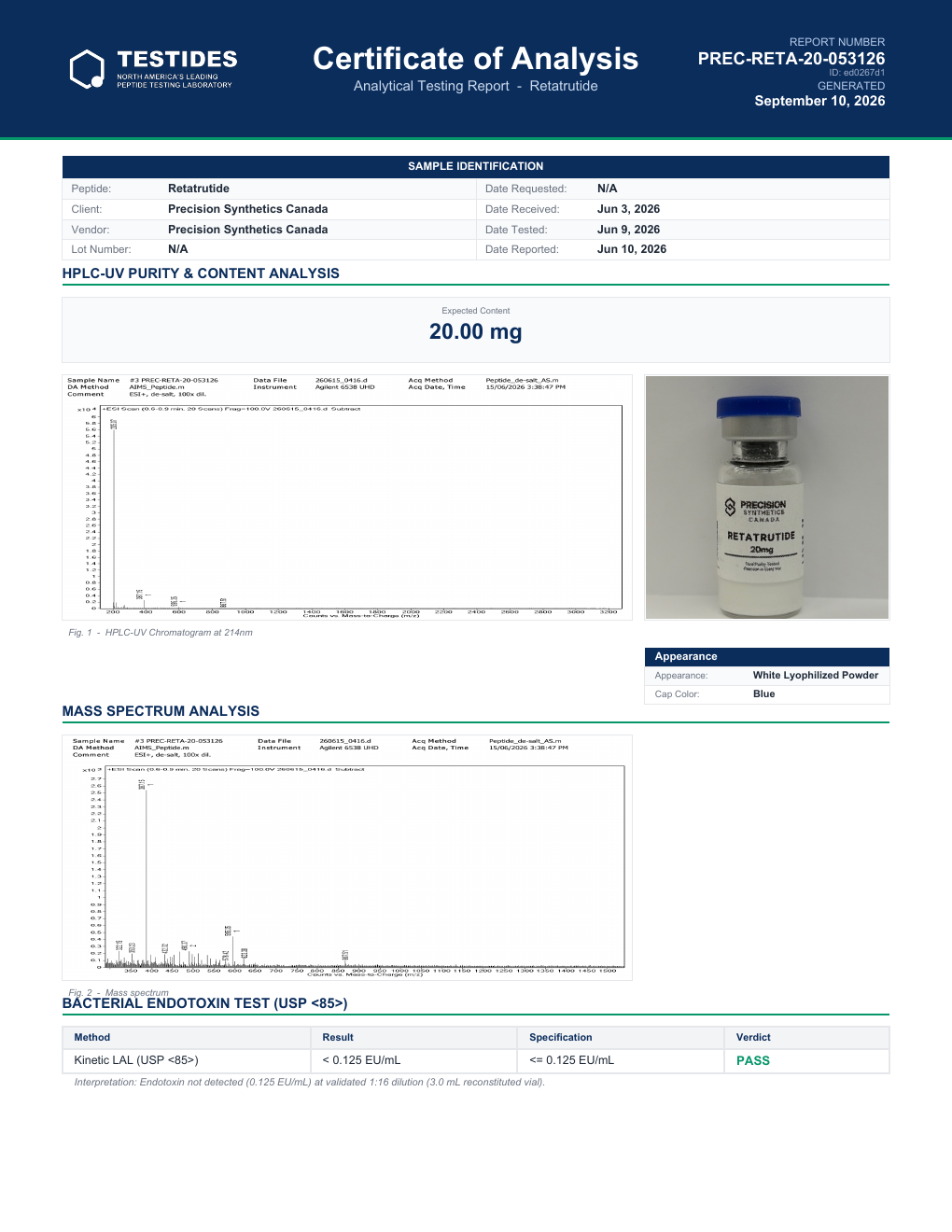
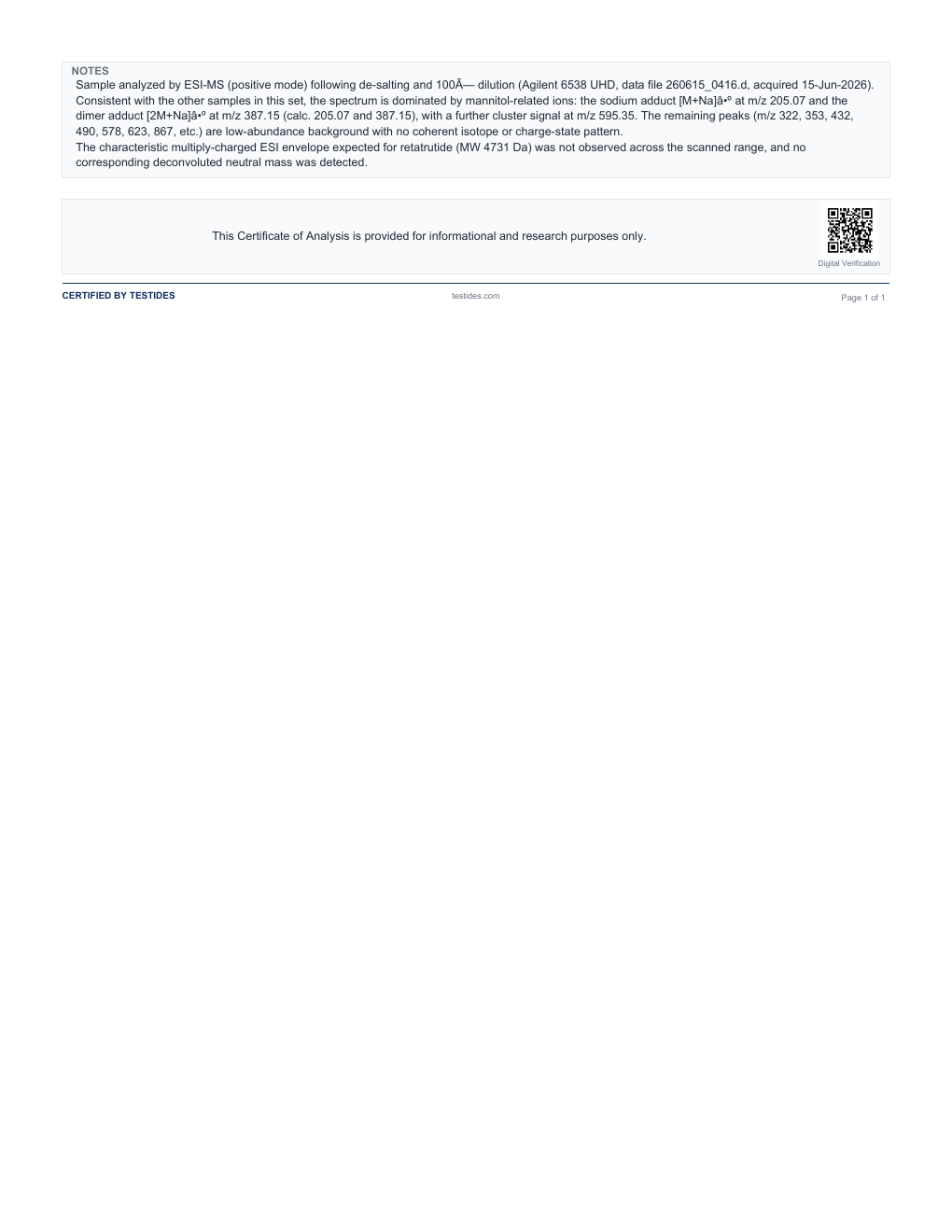
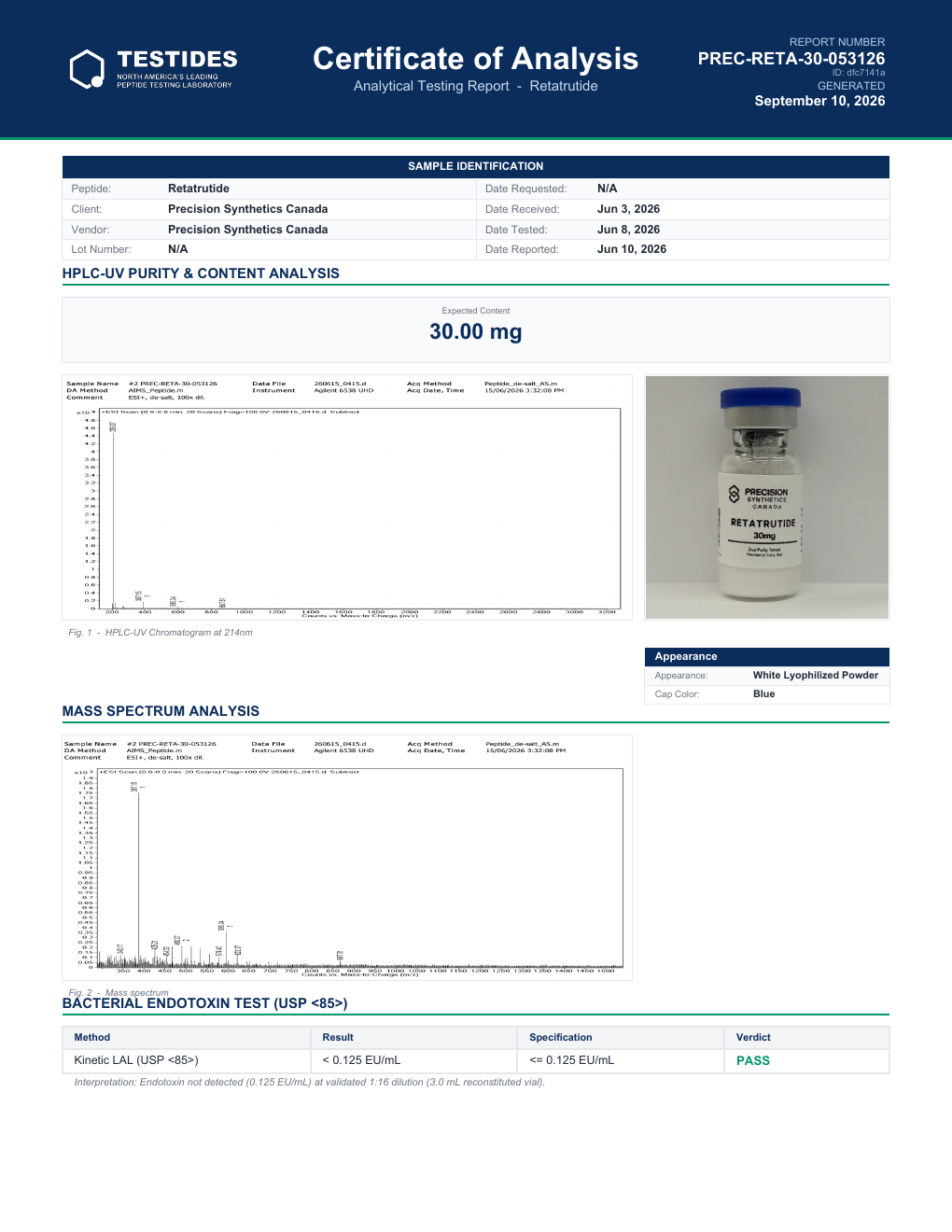
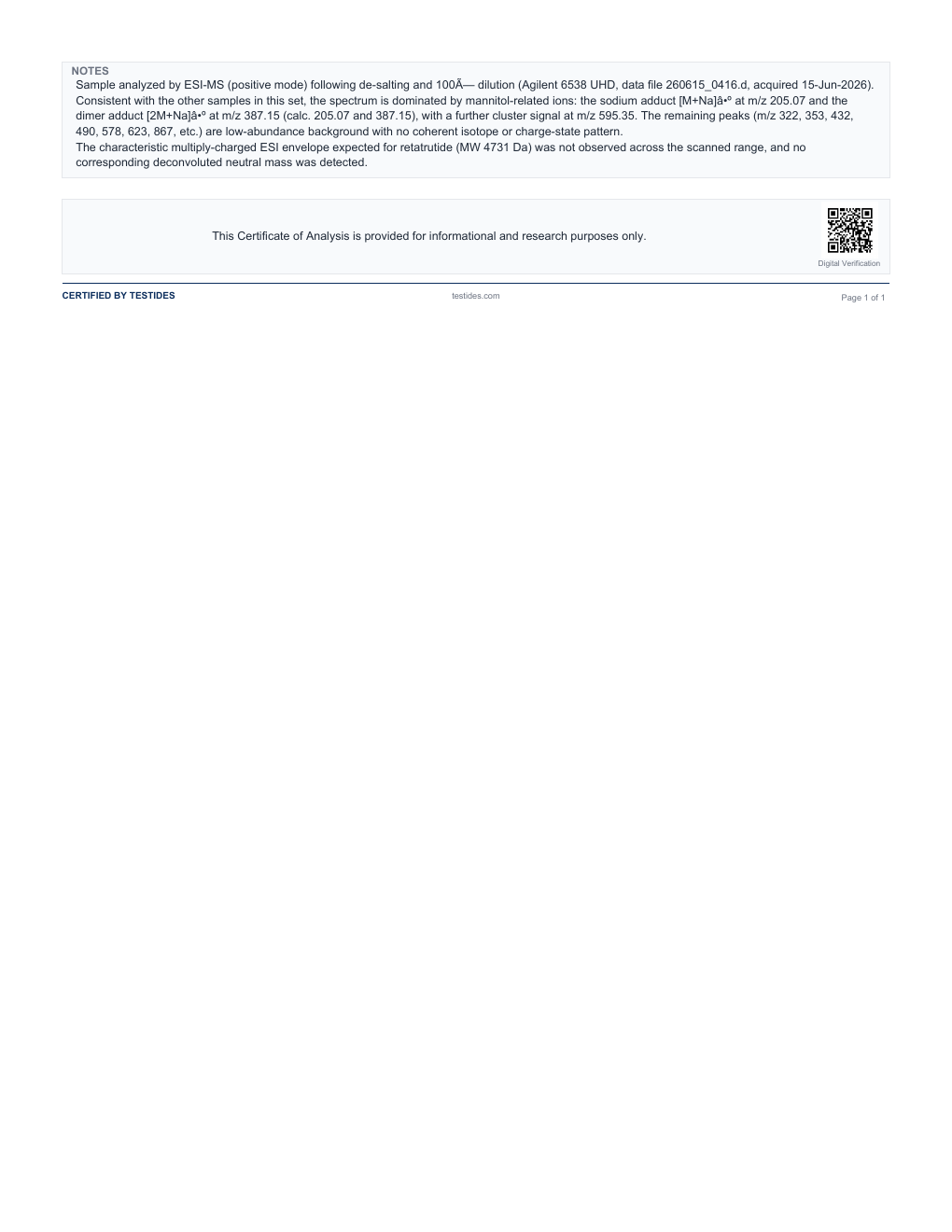
The green PASS on these Testides COAs belongs to the bacterial endotoxin test. It doesn't change the peptide finding or give us a reason to sell material whose stated peptide content hasn't been confirmed.
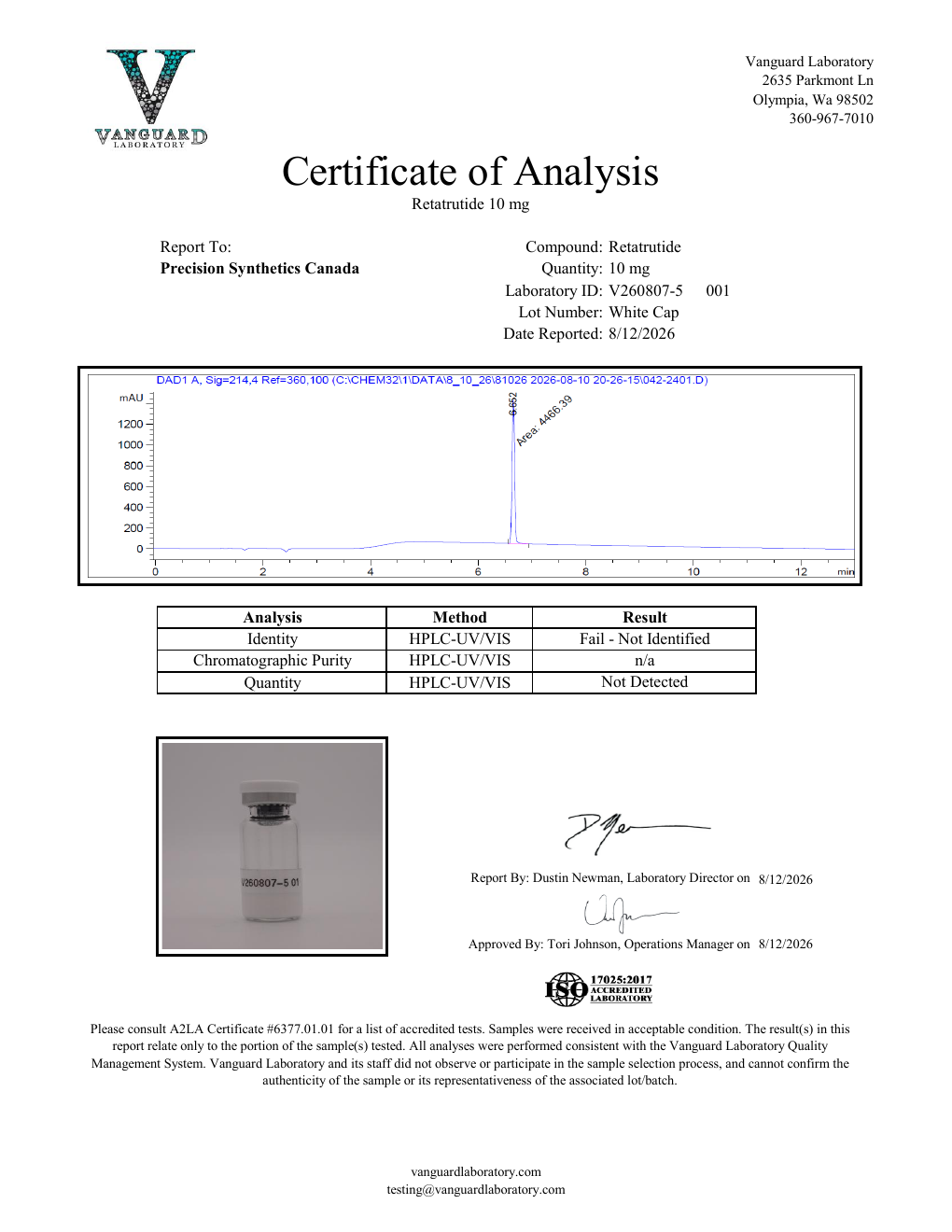
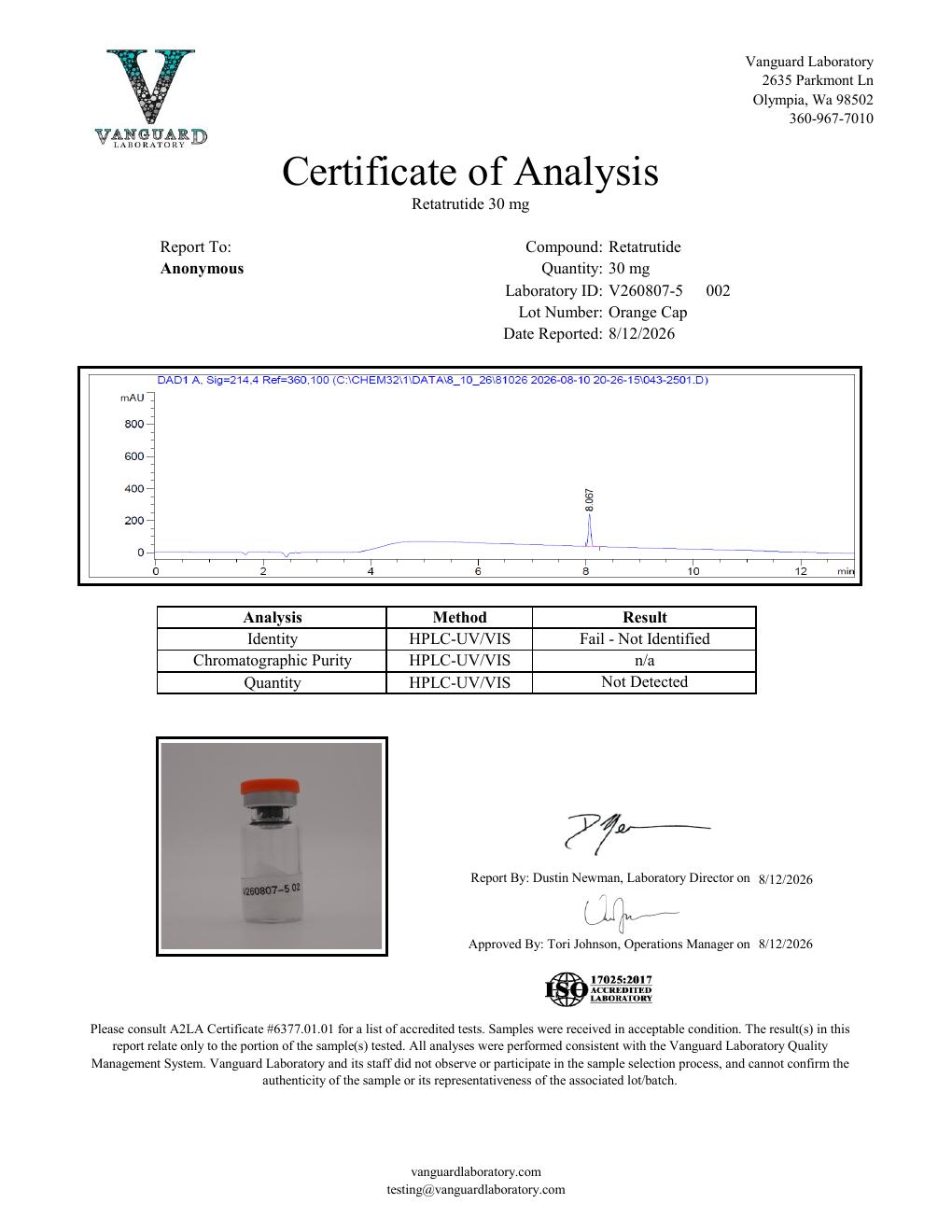
We saw the same type of failure in two Vanguard Laboratory reports for samples submitted as Retatrutide 10 mg and 30 mg. Both show “Fail - Not Identified” under Identity and “Not Detected” under Quantity, with purity listed as “n/a.” We kept that material off sale as well.
In another case, a sample sent through PTC as Tirzepatide was identified as BPC-157. Finding a different peptide still left us with material we could not sell as the product we had ordered. The testing laboratories were the ones identifying these problems in the samples we submitted.
An old COA can't answer for the next batch
Buying directly from a manufacturer or bulk supplier can look cheaper, and the quoted price is easy to compare. A current test for the actual batch being offered takes more checking. If the supplier sends a COA from an older shipment, you still need evidence for the material you are about to pay for. Commissioning that test yourself adds to the price, and a failed result can leave you paying for unusable material as well.
We arrange independent testing for every peptide batch before sale, including each new batch of a product we have stocked before. Customers can review the reports for released products in our COA library, with our guide to reading a COA alongside it. The failed submissions above are our expense, and the products they ruled out have never been sold to our customers.
Report notes and testing context
All six reports above concern rejected material, not current inventory. The mg amounts identify submitted samples or expected content, not measured peptide quantities. Findings apply to the samples tested and do not establish the absence of every possible peptide. All nine report pages are reproduced in full; each report links to its unmodified original PDF.
Vanguard report 002 is addressed to Anonymous and is included here as a PSC failed-test record. The separate PTC Tirzepatide/BPC-157 incident is described from PSC's account; its report is not one of the six reproduced above.
SideChain Analytics is PSC's primary testing laboratory, with occasional supplementary testing by Testides, Vanguard Laboratory and Janoshik. Each historical report above retains its actual issuing laboratory.
Research-use notice: Precision Synthetics Canada products and documentation are provided strictly for lawful, non-clinical laboratory research purposes only. COAs and testing records are not medical documents, safety guarantees, sterility guarantees, therapeutic endorsements, dosing guidance, or approval for human or veterinary use.