
KLOW: Four Peptides, One Vial
Last updated: October 2026
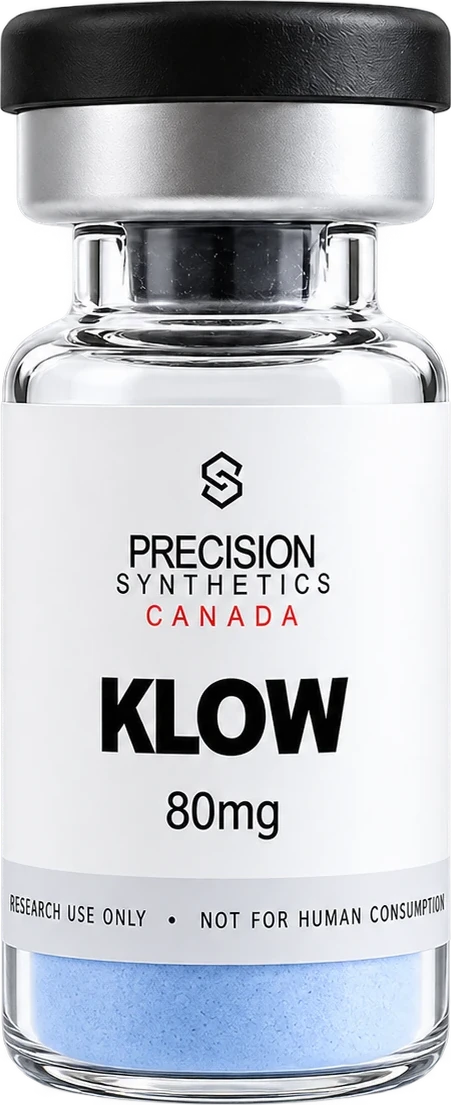
KLOW is a research blend of four synthetic peptides in one vial: GHK-Cu, BPC-157, TB-500 and KPV. Each one has its own research history, and this guide brings them together: what each peptide is, what researchers have studied, and how a four-peptide blend is tested.
Why the Four Are Studied Together
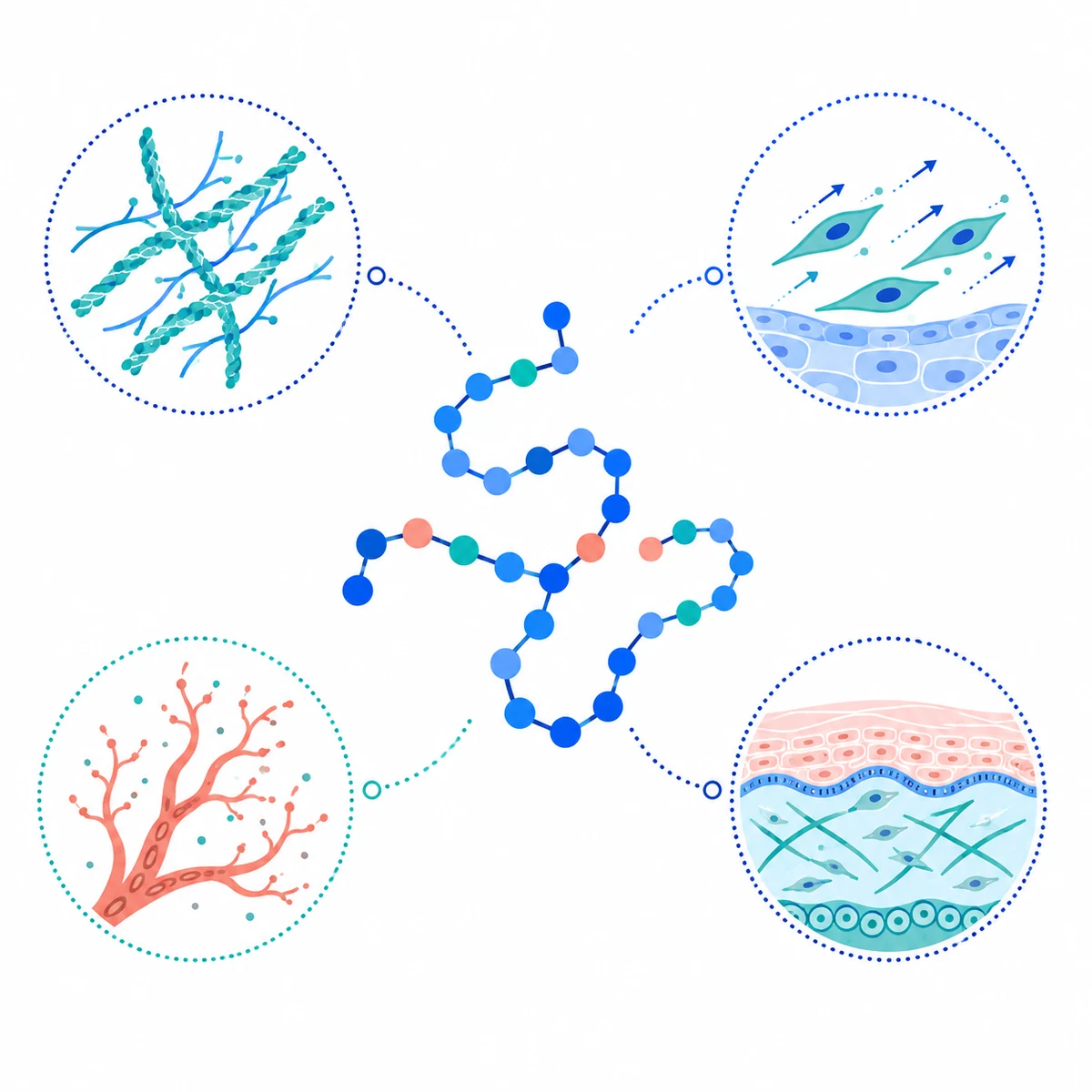
Each component comes from a different area of tissue research, and KLOW places all four in a single vial.
Peptides are short chains of amino acids, the same building blocks that make up proteins. The four in KLOW are small even by peptide standards: GHK-Cu and KPV are three amino acids long, TB-500 is seven and BPC-157 is fifteen. All four are made by chemical synthesis and supplied together as a freeze-dried (lyophilized) powder.
KLOW builds on GLOW, a three-peptide blend of GHK-Cu, BPC-157 and TB-500, with KPV added as a fourth component. Combining them gives a lab all four in one vial, which makes storage and record-keeping simpler.
The blend is newer than its parts, and the published research so far looks at each peptide individually. Because the ratio is fixed, researchers who want to adjust one compound on its own usually work with single-peptide vials alongside the blend.
- GHK-CuExtracellular-matrix research
- BPC-157Cell migration and vascular signalling
- TB-500Actin and cell-movement biology
- KPVInflammatory-signalling research
How the Four Come Together
Each component has its own research guide. Select a card to open it.
The Four Components
What each peptide is and where its research has focused.
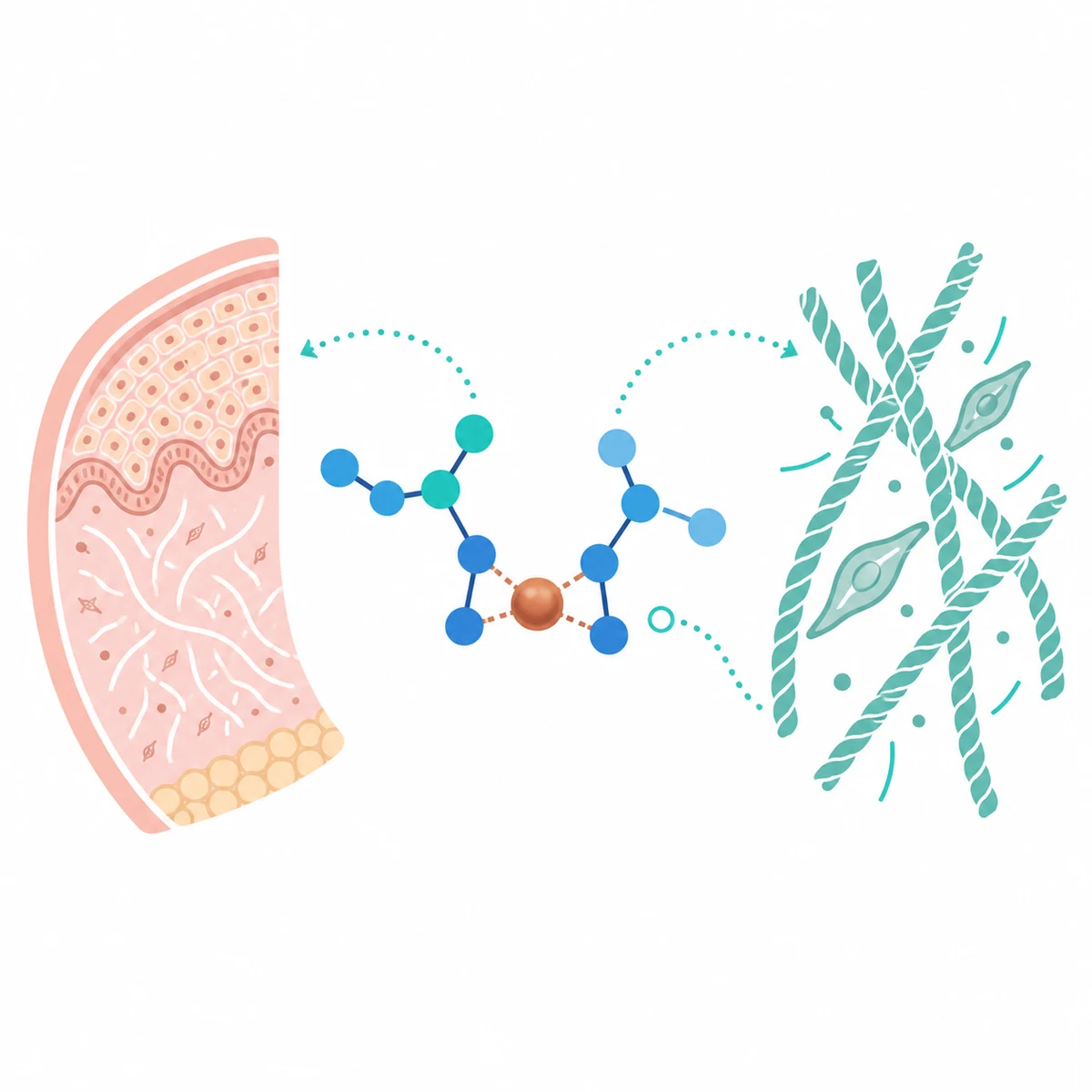
GHK-Cu
3 amino acids + copper(II)
What it is
The tripeptide glycine-histidine-lysine (GHK) bound to a copper(II) ion. GHK occurs naturally in human plasma, and the copper-bound form is a familiar cosmetic ingredient listed as copper tripeptide-1.
Research focus
Fibroblasts, the connective-tissue cells that produce collagen and elastin, with collagen and matrix output measured in culture. Rat wound models and topical-formulation studies build on that work.
GHK-Cu research guide →BPC-157
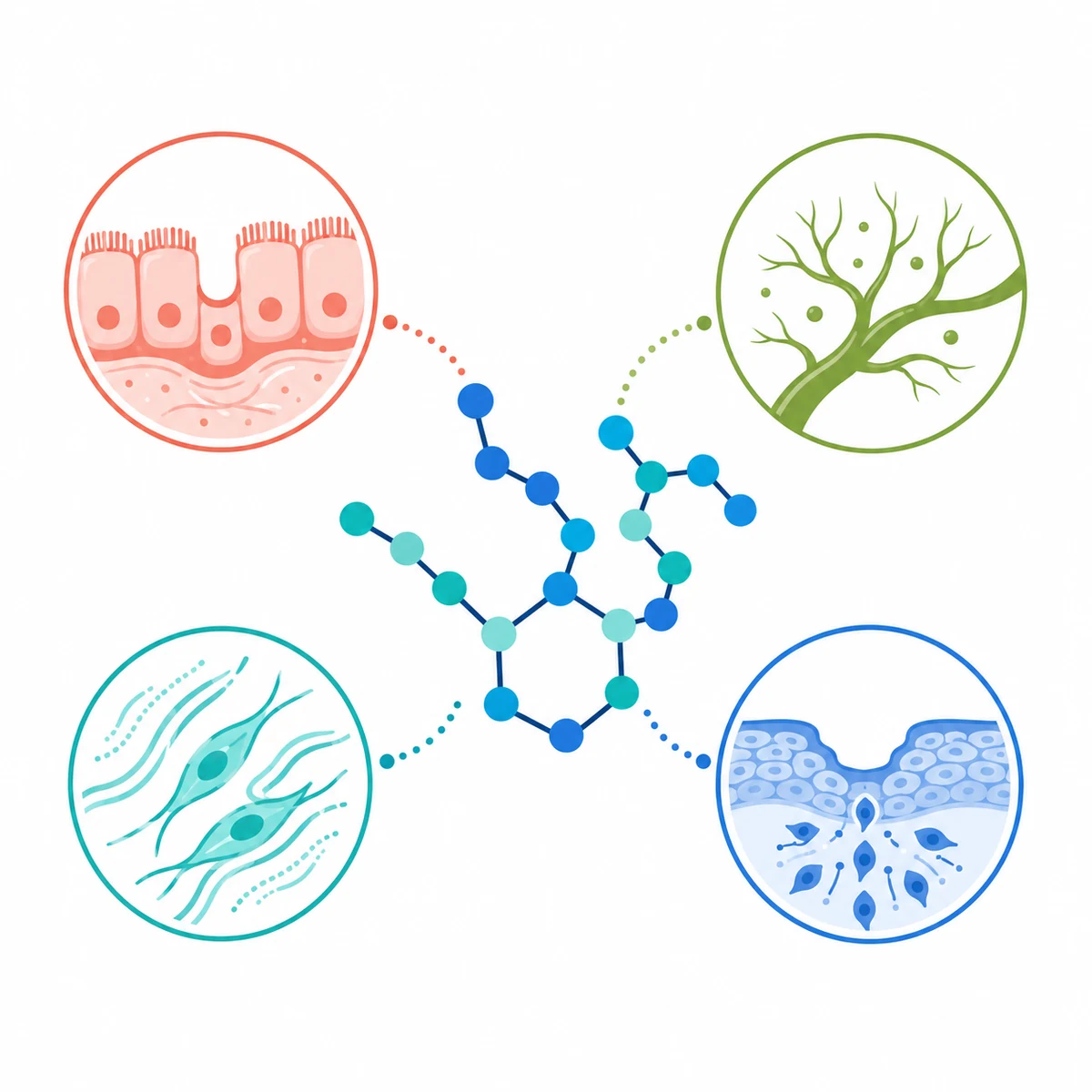
15 amino acids
What it is
A pentadecapeptide whose sequence is derived from a protein in human gastric juice. The name stands for "body protection compound".
Research focus
Rodent and cell-culture models covering tendon-fibroblast migration and survival, endothelial signalling (the cells lining blood vessels) and gastrointestinal models, with the first small human pilot studies now published.
BPC-157 research guide →TB-500
7 amino acids
What it is
A synthetic, acetylated copy of amino acids 17 to 23 of thymosin beta-4 (Ac-LKKTETQ), from the region of the protein involved in actin binding.
Research focus
Thymosin beta-4, which helps regulate actin, has a broad cell-migration and wound-model literature. Studies on the short fragment cover its identification, detection and metabolism along with cell-migration testing.
TB-500 research guide →KPV
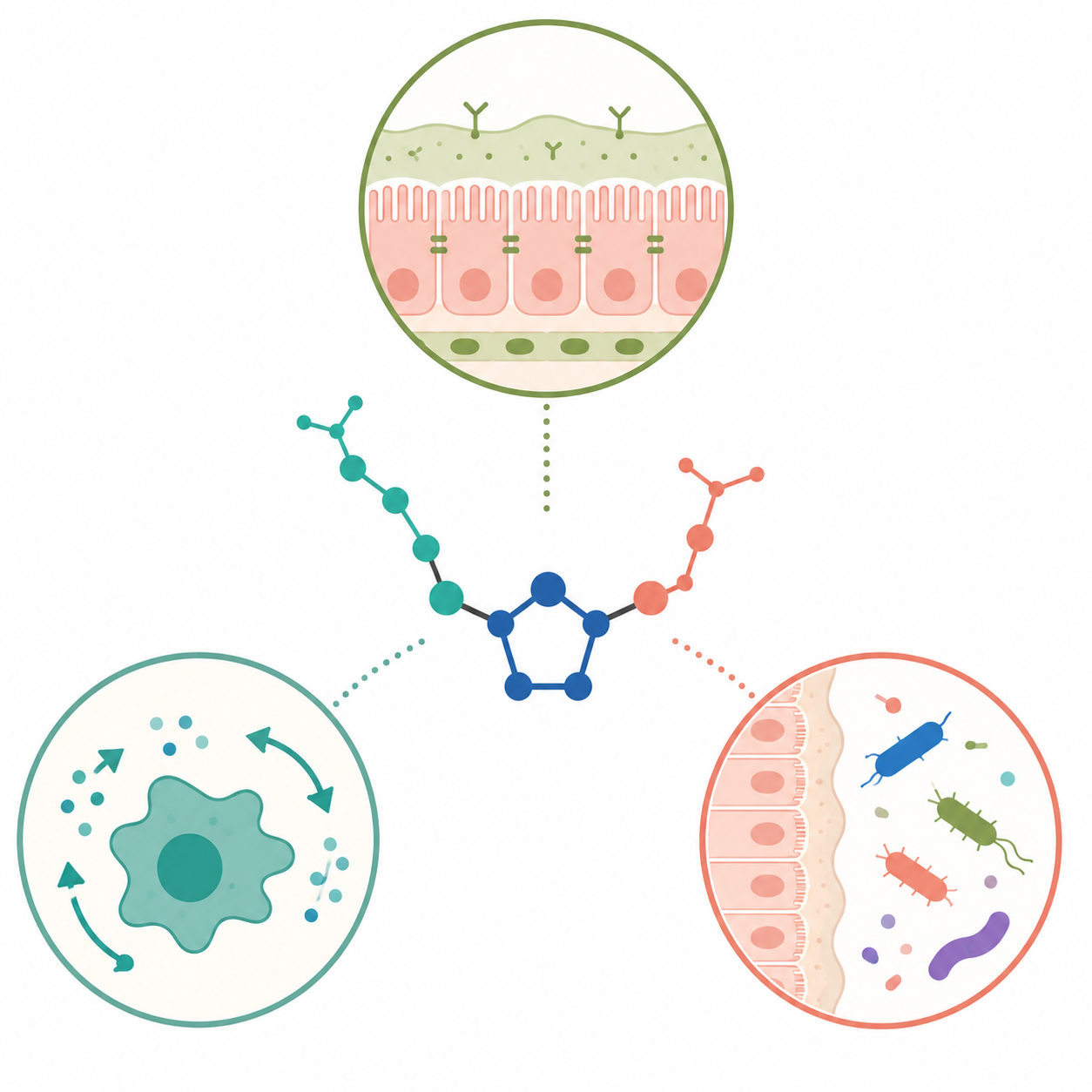
3 amino acids
What it is
Lysine-proline-valine, the last three amino acids of alpha-melanocyte-stimulating hormone (alpha-MSH), which the body produces naturally.
Research focus
Intestinal and immune cell lines, where KPV enters cells through the PepT1 transporter and researchers measured changes in NF-κB and MAPK signalling. Mouse colitis models carry the work into animal studies.
KPV research guide →Inside the 80 mg
The 80 mg on the label is the combined content of all four peptides.
GHK-Cu makes up 50 mg, and BPC-157, TB-500 and KPV are 10 mg each, so a KLOW vial holds the same 10 mg of BPC-157 as a standard single BPC-157 vial, alongside the other three.
How a Blend Gets Tested
A blend takes more work to characterize than a single peptide, because the lab has to identify and quantify four molecules in the same sample.
Identity
Mass spectrometry confirms each peptide by its molecular weight, and all four components should be listed with a match.
Purity
HPLC separates the components and reports what proportion of the material is the intended peptides rather than synthesis by-products.
Content
A milligram result, per component or for the total, compared against the label claim.
Endotoxin
The LAL test measures bacterial endotoxin, a contaminant that can skew cell-based experiments.
When reading a blend COA, match the batch number on the vial to the report and confirm that all four peptides are named. Our KLOW batch is in stock and with an independent lab for identity, purity and LAL endotoxin testing. Ordering opens once the results are posted on our COA page, where each report can be verified directly with the issuing lab.
Common KLOW Research Questions
Is KLOW the same as GLOW?
GLOW contains three of the same components (GHK-Cu, BPC-157 and TB-500). KLOW adds 10 mg of KPV, bringing the total to 80 mg.
Has the KLOW blend itself been studied?
Published research so far studies each component on its own rather than the four-peptide blend, and most of it is laboratory and animal work. Each component's research guide covers its studies in detail.
Does 80 mg mean 80 mg of each peptide?
The 80 mg is the total for all four peptides: 50 mg GHK-Cu plus 10 mg each of BPC-157, TB-500 and KPV.
When will the KLOW test results be available?
Results are posted on our COA page as soon as the independent lab completes testing on the batch, and ordering opens at the same time.
Glossary of Terms
Lyophilized
Freeze-dried. The peptides are supplied as a dry powder rather than a liquid.
Fibroblast
A connective-tissue cell that produces collagen, elastin and other parts of the extracellular matrix.
Extracellular matrix
The network of proteins, such as collagen and elastin, that surrounds and supports cells in tissue.
Endothelial cells
The cells that line the inside of blood vessels.
Actin
A structural protein cells use to hold their shape and to move.
PepT1
A transporter protein that carries small peptides into intestinal and some immune cells.
NF-κB and MAPK
Two signalling pathways cells use when responding to inflammation or stress, commonly measured in cell studies.
Mass spectrometry
A method that measures molecular weight very precisely, used to confirm a peptide's identity.
HPLC
High-performance liquid chromatography, which separates the components of a sample to measure purity.
LAL endotoxin test
A test that detects bacterial endotoxin in a sample.
References
- Pickart L, Margolina A (2018). Regenerative and protective actions of the GHK-Cu peptide in the light of the new gene data. PMC6073405
- Maquart FX et al. (1988). Stimulation of collagen synthesis in fibroblast cultures by the tripeptide-copper complex GHK-Cu. PubMed 3169264
- Chang CH et al. (2011). BPC-157 and tendon fibroblast outgrowth, survival and migration. Journal of Applied Physiology.
- Lee E et al. (2025). Small human pilot study of BPC-157 in two healthy adults.
- Esposito S et al. (2012). Synthesis and characterization of the acetylated 17–23 fragment of thymosin beta-4 identified in TB-500. Drug Testing and Analysis. DOI 10.1002/dta.1402
- Dalmasso G et al. (2008). PepT1-mediated tripeptide KPV uptake reduces intestinal inflammation. Gastroenterology. PMC2431115
Full reference lists are on each component's research guide.
Related Research
For research use only. Not for human or veterinary use.