
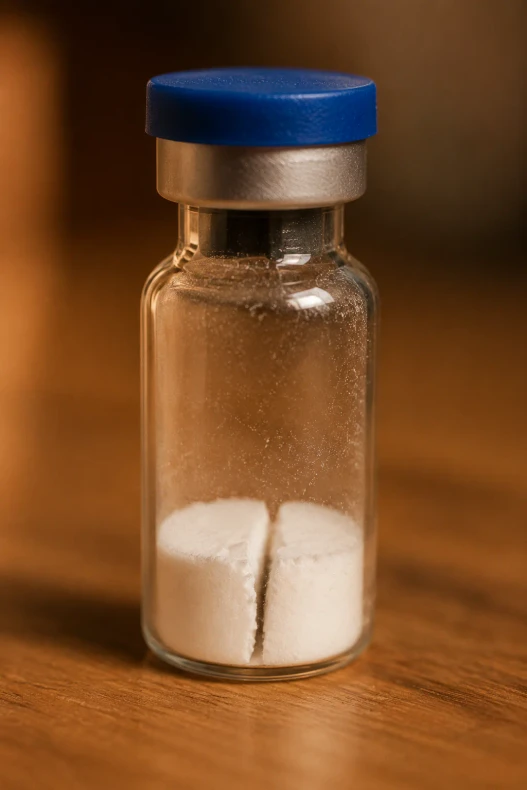
A clean crack or split in an otherwise sealed, dry, normally coloured, undamaged vial is usually fine. Freeze-drying leaves a light, porous, brittle structure called a lyophilized cake. That structure can shrink or split as it dries while all of the dry material remains enclosed in the vial.
The cake is closer to a very light dried sponge than a solid tablet. As water leaves, the structure can pull inward and a clean line can open through it. The gap changes what you see through the glass, while the dry pieces continue to hold the material that was already there.
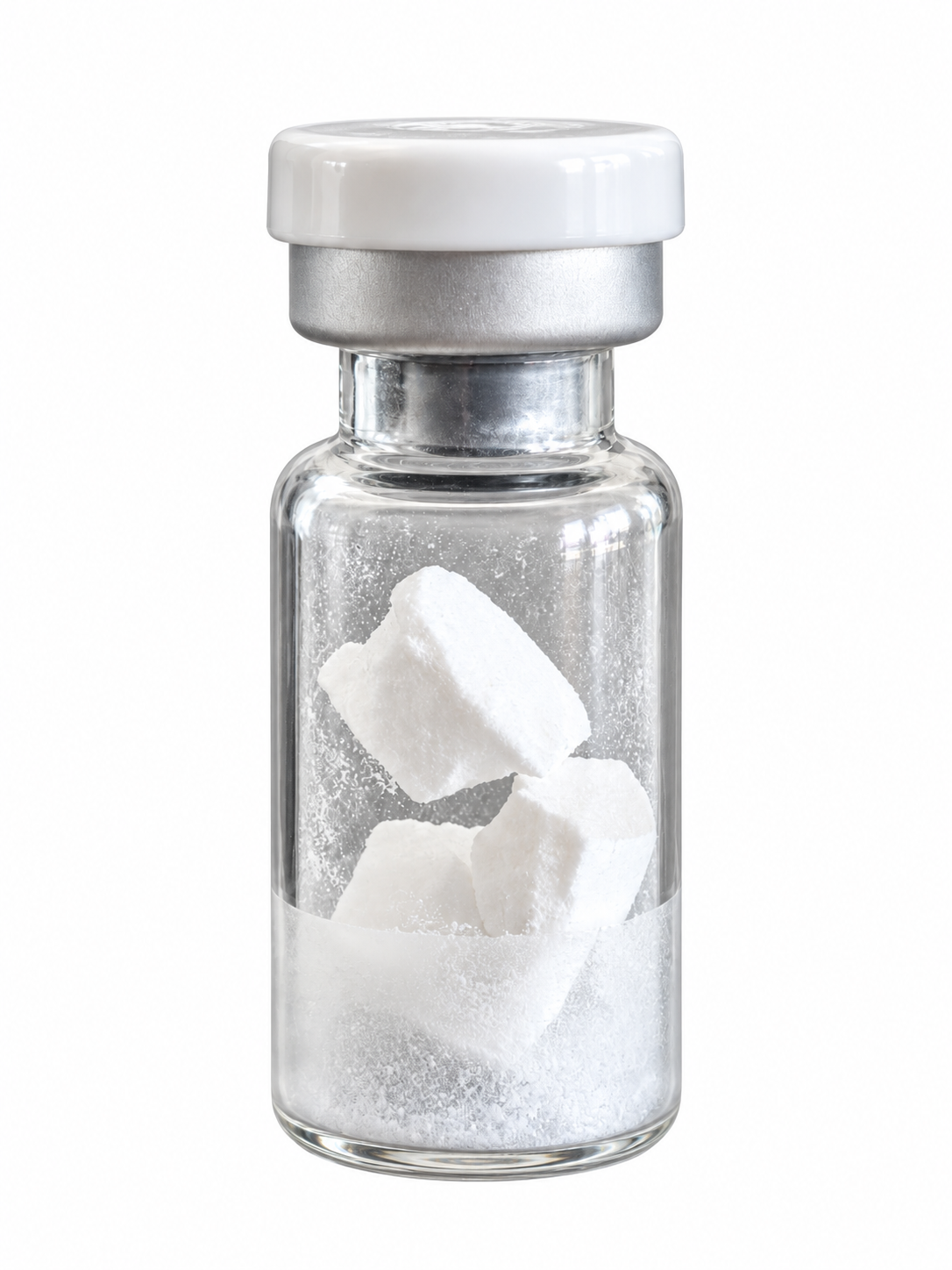
A clean fracture is usually an appearance change
An intact stopper and seal, undamaged glass, a dry cake with its normal colour, and no leakage, foreign material, droplets, or unexpected liquid are all reassuring. With that combination, a clean split or a few dry fragments are an ordinary appearance variation in a brittle cake. The crack creates empty space between dry sections without removing anything from the vial.
Use the batch number on the vial to find the same batch on the COA. The COA may list the identity result, HPLC purity, and the measured amount in milligrams per vial. Those results describe the tested batch, while the visual check covers dryness, normal colour, intact glass, and the seal.
Moisture or container damage deserves review
Contact the supplier of the vial if you see unexpected liquid or droplets, a wet or melted appearance, marked discolouration, foreign material, damaged glass, leakage, or a loose, displaced, punctured, or otherwise compromised stopper or seal. Those conditions involve more than an ordinary clean line through a dry cake and deserve a batch-specific review.
When requesting a review, include clear photographs of the full vial, cake, stopper and seal, and readable label. The photographs show the supplier the batch number and exact condition that arrived.
For the broader question of why dry vial appearances can vary, see Big Puck, Small Puck: Reading Lyophilized Peptide Vials Carefully. In the ordinary clean-crack scenario described here, the vial is usually fine: the brittle cake changed shape and the dry material stayed inside.
Sources and context
- Ullrich et al. measured shrinkage, drying tension, hardness, brittleness, and cracking in amorphous lyophilized cakes.
- Patel and colleagues reviewed acceptable and non-ideal lyophilized cake appearances, including cases in which an appearance variation is an inherent physical characteristic without an effect on product quality.
- The FDA lyophilization inspection guide explains water removal from a frozen preparation and describes moisture-associated collapse or meltback.
Research-use notice: Precision Synthetics Canada products and documentation are provided strictly for lawful, non-clinical laboratory research purposes only. COAs and testing records are not medical documents, safety guarantees, sterility guarantees, therapeutic endorsements, dosing guidance, or approval for human or veterinary use.