
A sealed, dry, lyophilized vial that arrives merely warm after ordinary parcel transit is usually not ruined because it is no longer cold. A melted cold pack is not a temperature record, and dry material generally tolerates short transit excursions better than the same material after liquid has been added. The assessment changes when a vial contains liquid, has endured sustained extreme heat, shows unexpected moisture, or arrives with container damage.
Dry vials during transit
Lyophilization removes most of the water from a formulated solution, leaving the peptide in a dry, porous structure. Removing water can slow several chemical reactions and physical changes that occur more readily in solution, which is one reason peptides are commonly supplied in dry form.
This difference helps explain why a dry vial can arrive warm without being presumed unusable. The temperature at the moment the parcel is opened reveals little about the full journey. Ordinary parcel warmth and prolonged storage in intense heat create very different exposures.
A study of one lyophilized CSP7 peptide formulation illustrates the potential resilience of a well-designed dry product. The tested formulations retained more than 96 percent of the peptide for up to four weeks at room temperature and remained stable for up to ten months at 5°C when protected from moisture. High humidity increased moisture uptake and changed the formulations’ behaviour, so those results belong to that particular peptide and formulation rather than establishing a universal shipping limit.
Stability studies are specific to the material, formulation and container being evaluated. The peptide itself, the ingredients dried with it, how much moisture remained after drying, how well the stopper and seal stayed closed, and the full temperature history can all influence the outcome. Those variables prevent one temperature-and-time cutoff from fitting every lyophilized peptide.
The Janoshik garage samples
In a PepTok interview, Peter Magic of Janoshik described retaining extra reference samples from submitted kits when the laboratory began around 2012 or 2013. A large bag of those samples was forgotten in his garage for roughly a decade. The retained material was mostly human growth hormone from multiple manufacturing plants, and his later testing found some degradation; the example he gave was a sample declining from approximately 11 IU to around 10.5 IU.
When the conversation turned separately to GLP-1 compounds, Magic said Janoshik had conducted many degradation tests and found properly made, undissolved lyophilized vials highly stable, including at room temperature. He also described a manufacturing problem in which an unwanted component was associated with an initial decline of about 3 to 4 percent before degradation slowed considerably. Taken together, his observations suggest that dry material can be resilient while formulation and manufacturing quality still influence stability. The garage samples were a real-world laboratory anecdote rather than a controlled shelf-life study, so they cannot determine the condition of a particular delivered vial.
Reading the condition of the delivery
The arrival condition provides a practical starting point even when the parcel contains no temperature logger. This table separates routine transit observations from circumstances that deserve closer review.
| Arrival condition | Practical interpretation and response |
|---|---|
| Dry vial that is merely warm | Ordinary parcel warmth usually does not condemn a sealed lyophilized vial. Inspect the glass, stopper and crimp, then move it to the supplier’s recommended storage condition. |
| Melted cold pack | A melted pack confirms only that it absorbed enough heat to thaw; it cannot reveal the vial’s highest temperature, how long it was warm, or whether the material degraded. |
| Evidence of sustained extreme heat | Prolonged exposure in a very hot mailbox, vehicle or similar environment deserves a more cautious assessment. Photograph the parcel and vial, record when they were collected, and contact the supplier with the known circumstances. |
| Dry vial arriving very cold or frozen | A sealed dry vial can remain intact through cold Canadian winter transit. Keep it closed while it reaches room temperature so moisture from room air is not introduced when the vial is opened. |
| Vial already containing liquid | A vial that already contains liquid needs a separate assessment because temperature, pH, the liquid’s buffering ingredients, concentration and freeze-thaw history can change a dissolved peptide. |
| Visible moisture, liquid or container damage | Unexpected moisture or liquid in a vial intended to be dry, cracked glass, a loose or displaced stopper, or a disturbed crimp should be photographed and raised with the supplier before further handling. |
Arrival condition helps assess the package and shipping exposure; it cannot show whether the peptide has chemically degraded. A supplier’s stated shipping range or an included temperature indicator provides more specific evidence for that parcel.
A melted cold pack is not a temperature record
A cold pack begins absorbing heat as soon as the parcel enters a warmer environment. Its condition on arrival is affected by its starting temperature, size, insulation, parcel contents, transit duration and outdoor conditions. A fully melted pack therefore confirms only that enough heat entered the package to melt it. Without a temperature logger, the pack cannot reveal the vial’s highest temperature, the duration of the exposure, or whether the parcel warmed only near the end of delivery.
Cold packs can reduce heat exposure during transit, particularly at the beginning of a journey. Their condition on arrival cannot confirm that the parcel remained refrigerated or that a dry vial was damaged once the pack thawed.
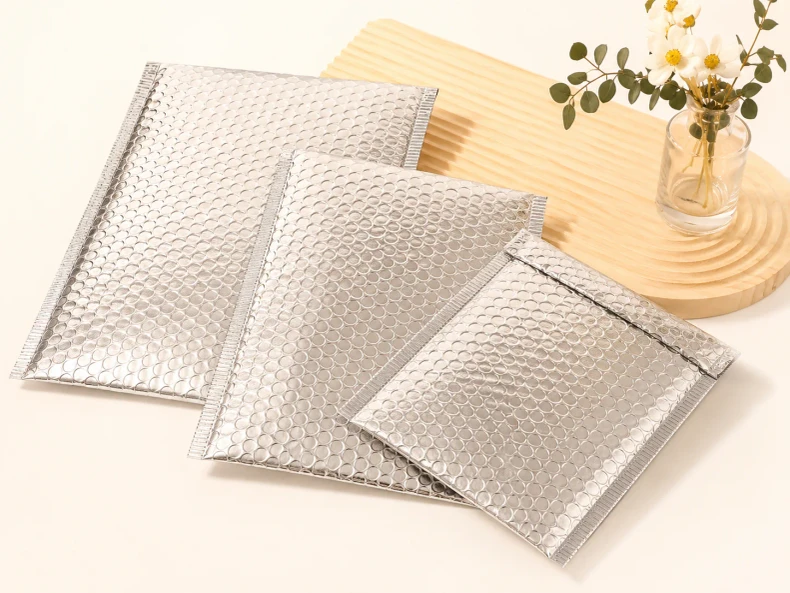
We ship dry vials in insulated, heat-resistant reflective mailers designed to slow heat transfer. The reflective outer layer and air-cell insulation help keep the parcel closer to a moderate ambient temperature during ordinary transit, narrowing some of the unknowns created by direct sun, hot vehicle surfaces, or abrupt outdoor temperature swings. This is passive insulation rather than refrigeration, so the mailer cannot provide an exact temperature history.
Liquid requires a separate assessment
Once liquid is present, the formulation has a different stability profile. A 2025 semaglutide solution-state study found that temperature, pH, and the type and strength of buffers—ingredients used to control acidity—influenced degradation. These variables explain why a dissolved peptide needs to be assessed separately from a sealed dry vial.
Repeated freezing and thawing can add another source of stress for material in solution. A liquid vial that arrives warm, partially frozen or with an unknown freeze-thaw history should therefore be assessed using its exact formulation, shipping instructions and recorded exposure rather than the more reassuring expectations applied to dry material.
Handling a very cold delivery
A dry vial delivered during a Canadian winter may be at or below freezing when the parcel is opened. Keep the vial sealed until it reaches room temperature, especially if it will be opened or dissolved soon afterward. Thermo Fisher’s peptide-handling instructions use the same approach for cold lyophilized peptides to reduce condensation and moisture exposure.
Warming should occur gradually at ordinary room temperature rather than through direct heat. Once the closed vial has equilibrated, follow the stated peptide storage guidance for the product.
The practical conclusion
Ordinary warmth during parcel delivery usually does not ruin an intact, sealed vial that still contains dry lyophilized material. A thawed cold pack does not change that conclusion on its own because it provides no temperature history.
A vial already in liquid form, a parcel exposed to sustained extreme heat, unexpected moisture inside a dry vial, cracked glass, a loose stopper or a disturbed crimp calls for a more cautious response. Preserve the packaging, take clear photographs, note the delivery and collection times, and contact the supplier with the specific arrival conditions.
Sources and context
- FDA/ICH Q1A(R2): Stability Testing of New Drug Substances and Products
- Formulation for a Novel Inhaled Peptide Therapeutic for Idiopathic Pulmonary Fibrosis
- Effect of pH, buffers, molarity, and temperature on solution-state degradation of semaglutide
- Thermo Fisher Scientific: Handling and Storage Instructions for Standard Peptides
- Peter Magic of Janoshik: PepTok interview
- Verified interview transcript
Research-use notice: Precision Synthetics Canada products and documentation are provided strictly for lawful, non-clinical laboratory research purposes only. COAs and testing records are not medical documents, safety guarantees, sterility guarantees, therapeutic endorsements, dosing guidance, or approval for human or veterinary use.