
Overfill means a tested vial contained more peptide than its label states, while underfill means it contained less. A modest overfill is not inherently a problem; underfill is a shortfall against the labelled amount and deserves closer review. The size of the difference and whether similar results repeat across the batch tell the buyer far more than either label by itself.
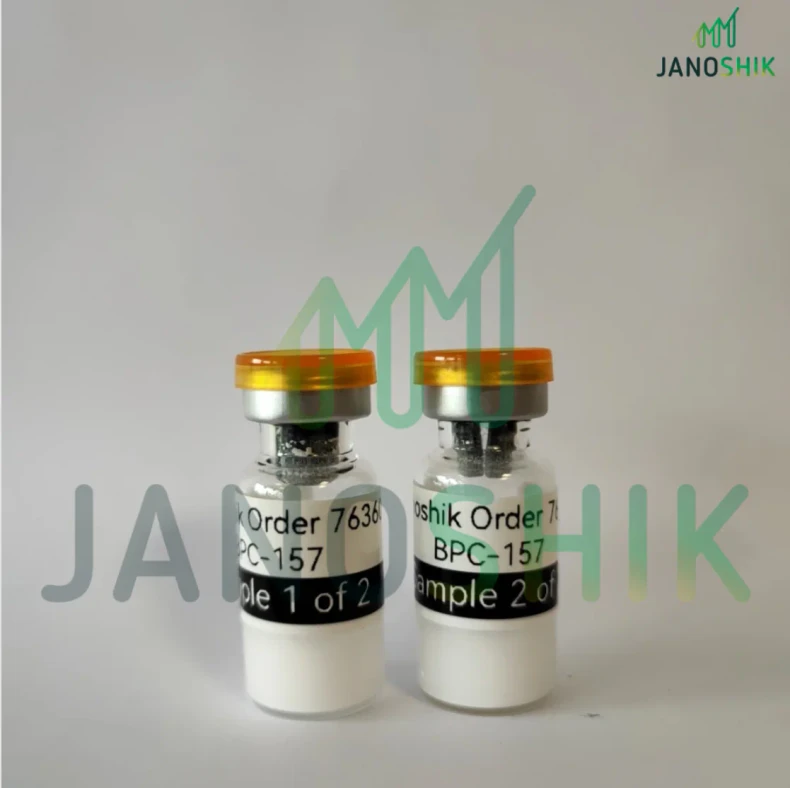
A matching batch COA gives the buyer a useful reference, although its exact decimal result belongs to the vial submitted for testing. Another vial from the same batch should be close when that batch was mixed and filled consistently. We tested how closely that result could repeat through an independently organized group buy: two separately selected 10 mg BPC-157 vials from the same supplier batch measured 10.56 mg and 10.53 mg, a difference of only 0.03 mg.
Start with a Matching Batch COA
Before using a COA as a reference, check that it corresponds to the same peptide and the same supplier batch or lot as the vial. A report from another production run may show the same product name, although it cannot establish how much was placed into the buyer's batch. Once the product and batch match, the tested result becomes a useful reference for that run.
The COA also needs to report the appropriate measurement. To answer how many milligrams were found in the submitted vial, look for a quantitative content result expressed in milligrams per vial. A useful report should identify the peptide, provide the measured content when quantitative testing was performed, and list the chromatographic purity result.
A purity percentage by itself cannot answer the buyer's content question. It describes the relative purity of the detected peptide signal, while the milligram result reports the measured amount in the vial.
Paired Results from One Supplier Batch
The paired BPC-157 results provide a direct same-batch comparison:
| Tested material | Labelled amount per vial | Vial 1 result | Vial 2 result |
|---|---|---|---|
| BPC-157 content | 10.00 mg | 10.56 mg | 10.53 mg |
| Chromatographic purity | - | 99.797% | 99.861% |
The two content measurements differed by 0.03 mg. Relative to the 10 mg label, the results were 105.6% and 105.3% of the labelled amount. The difference between the two vials was therefore equal to about 0.3% of the 10 mg label.
Both vials tested slightly above the label, making them modest overfills in relation to the stated 10 mg amount. For the buyer's question, the central finding is how closely the two content results agreed. Two separately selected vials from the same supplier batch contained nearly the same measured amount of BPC-157.
That agreement supports the expectation that another vial from the same batch should be close to the COA result. The report does not identify why both samples were above the label or establish a universal acceptable overfill range. Its useful contribution here is the direct evidence that the measured amount repeated closely across the two submitted vials.
Content and Purity on the COA
The 99.797% and 99.861% figures in the table are chromatographic purity results. They describe how much of the detected peptide-related signal was attributed to BPC-157. They are not overfill percentages and cannot be used to calculate the number of milligrams in either vial.
The 10.56 mg and 10.53 mg measurements are the quantitative content results. Those are the figures that answer how much BPC-157 was measured, whether each vial was above or below the 10 mg label, and how closely the two samples agreed.
A vial can have a high chromatographic purity result while containing a range of possible milligram amounts. Read the content field to find the measured amount per vial and the purity field to find the relative purity of the detected peptide signal. A fuller explanation is available in Why Purity Percentage Alone Is Not Enough.
Repeated Samples Strengthen the Batch Reference
One quantitative test linked to a defined batch establishes a useful reference because it shows what was measured in a vial traceable to that production run. A second separately selected vial adds information that one result cannot provide: it shows whether a similar content result appears again.
When repeated same-batch measurements are close, the evidence for consistent filling becomes stronger. A larger difference between samples would indicate that additional sampling or investigation is appropriate. The comparison between 10.56 mg and 10.53 mg shows a narrow spread, providing direct evidence that the amount was reproduced closely across the sampled vials.
Paired or repeated testing gives the buyer more evidence than a single COA result alone. The first test supplies the batch reference, and the additional test shows how closely that result repeats in another vial from the same run.
Where Vial-to-Vial Consistency Comes From
For vials from one batch to contain similar amounts, the peptide must first be distributed evenly through the liquid prepared before filling. If different portions of that liquid contain different concentrations, vials filled from those portions can finish with different peptide amounts.
The filling equipment must then dispense nearly the same volume of that prepared liquid into each vial. Even with an evenly mixed solution, changing fill volumes can create differences after the contents are dried. Consistent vial content therefore relies on both an even concentration throughout the prepared liquid and repeatable filling from one vial to the next.
The paired BPC-157 results do not document each preparation or filling step. They provide the measurable outcome relevant to the buyer: the two sampled vials contained nearly the same amount. Repeated results are how consistency in the finished vials can be assessed rather than assumed.
The Group-Buy Comparison
The independently organized group buy included products from multiple suppliers. We participated to obtain additional independent testing and compare how consistently the tested products matched their labels.
The broader exercise looked across suppliers. For this article, the relevant result is the within-batch comparison created by testing two BPC-157 vials we submitted and connected through our group-buy records to the same supplier batch.
This paired result adds a layer of information beyond a single batch-linked test. It shows that the 10.56 mg result was followed by a closely similar 10.53 mg result in another vial from the same run. That is the type of evidence repeated sampling is designed to produce.
What This Means for Your Vial
A COA reports the measured content of the vial that was submitted for testing. It does not provide the exact decimal content of an individual vial that has never been tested. When the peptide and supplier batch match, however, the COA serves as a useful reference for what another vial from that run should be close to.
Confidence in that reference becomes stronger when separately selected vials from the same batch return closely aligned content results. Our BPC-157 pair measured 10.56 mg and 10.53 mg, showing that the amount was reproduced to within 0.03 mg across the two samples.
A matching batch COA is therefore a meaningful reference for the buyer's vial, and close repeated same-batch results provide direct evidence that the reported amount is being reproduced from vial to vial.
Sources and context
Janoshik Test Report #136566 is the source of the paired BPC-157 content results of 10.56 mg and 10.53 mg and the chromatographic purity results of 99.797% and 99.861%. Our group-buy records connect the two submitted vials to the same supplier batch, while the public report's visible Batch field is blank.
Research-use notice: Precision Synthetics Canada products and documentation are provided strictly for lawful laboratory research use. They are not intended for human or veterinary use, diagnosis, treatment, or consumption.