
The Word “Peptide” Is Doing Too Much Online

Posted by Jeremy S. Strickland on 2026 Jul 14th

The Word “Peptide” Is Doing Too Much Online

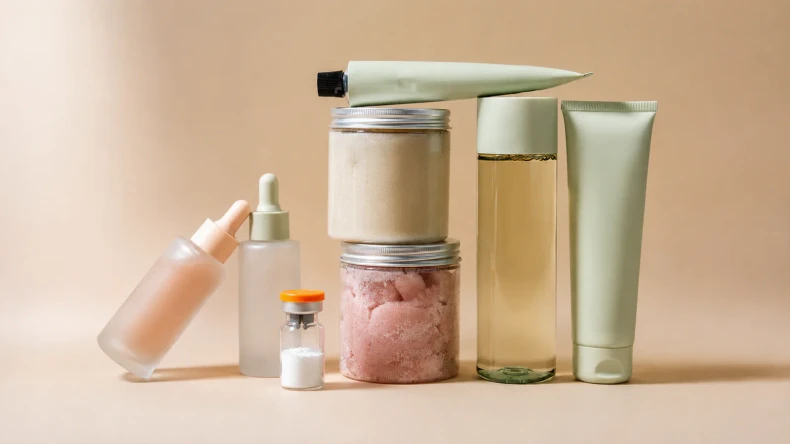
The word “peptide” can appear on a tub of collagen powder, a bottle of facial serum, a vial of insulin, and a news story about GLP-1 medications without being used incorrectly in any of those places. The chemistry connection is real, although the products belong to different categories and come with very different labels, expectations, and surrounding information.

Online conversation tends to flatten those differences. A skincare company may describe a “multi-peptide complex.” A supplement brand sells collagen peptides by the scoop. A health article refers to a prescription medication as a peptide drug. Social media places all of them under the same broad heading, often assuming that readers already understand which version of the word is being used.

Most people do not need a chemistry lesson to sort this out. They need a little more context around the noun. Once the product category is clear, the word “peptide” becomes much easier to interpret.

One Chemistry Word, Several Product Aisles

Peptides are molecules built from amino acids joined together. That definition covers an enormous range of structures, which is why the term travels so easily between biology, medicine, cosmetics, food science, and commercial product labels. IUPAC’s formal definition is broad enough to include compounds formed from two or more amino-acid building blocks linked through peptide bonds.

The everyday meaning is much less tidy. People usually expect a product category to narrow things down. “Face serum” suggests one kind of label and one kind of shopping decision. “Prescription medicine” suggests another. “Peptide” often describes a feature of the ingredient or molecule while leaving the product category unresolved.

This is why the phrase what does peptide mean online has no single answer. The useful meaning comes from the words beside it: collagen peptides, skincare peptides, peptide hormone, or GLP-1 medication. Each phrase points toward a different shelf.

The broadness is not a flaw in the science. It becomes confusing when marketing treats “peptide” as a complete product description rather than the beginning of one.

Collagen Peptides Are Usually an Ingredient Category

For many consumers, collagen powder is the first place the word becomes familiar. “Collagen peptides” generally refers to hydrolyzed collagen, meaning larger collagen proteins have been broken into smaller fragments. The finished ingredient contains a mixture of collagen-derived peptides rather than one single, uniquely named sequence.

That is quite different from a label naming a specific hormone or pharmaceutical ingredient. On a collagen tub, the word describes the form of the collagen material and helps distinguish it from intact collagen or gelatin. The rest of the package supplies the practical details: source, quantity, other ingredients, responsible company, and the product’s licensed claims where applicable.

Canadian readers also encounter some terminology borrowed from American websites. “Dietary supplement” is common online, while many comparable products sold with health claims in Canada fall within the natural health product system. Licensed natural health products can be identified by an eight-digit Natural Product Number, and Health Canada’s database includes collagen products listing hydrolyzed collagen as a medicinal ingredient.

In this setting, “peptide” is not acting as a promise that the powder belongs to some especially advanced or mysterious class. It is part of the ingredient description. The consumer label still carries the useful information.

That distinction helps with the wider confusion around peptide supplements. A package can say “collagen peptides” quite accurately while containing a broad mixture of collagen fragments. The plural is doing real work.

Skincare Peptides Live Inside a Formula

Skincare uses the word differently again. A serum may advertise peptides prominently on the front while listing one or more specific peptide ingredients in the full cosmetic ingredient list. Those ingredients sit alongside the base of the formula: water, humectants, preservatives, emollients, stabilizers, thickeners, and whatever else the manufacturer has included.

The finished cosmetic is therefore more than the featured peptide ingredient. Its texture, stability, packaging, concentration, and the rest of the formula all shape the product the customer actually receives.

This is why phrases such as “peptide complex” or “multi-peptide serum” can feel more specific than they are. They may describe a genuine combination of ingredients, although the front label rarely tells the complete formulation story. The ingredient list provides the more useful level of detail.

In Canada, cosmetic manufacturers and importers are required to provide an ingredient list and notify Health Canada that they are selling the product. That framework is built around the finished cosmetic and its ingredients, rather than around “peptide” as a stand-alone product class.

Skincare marketing also tends to give the word a futuristic tone. Peptides are often presented alongside terms such as “advanced,” “targeted,” or “next generation,” even though peptide ingredients have been used in cosmetic formulations for years. A careful reader can appreciate the ingredient story while still reading the complete label rather than letting the category word do all the selling.

Insulin Is a Peptide Too

Insulin is a useful reminder of how wide the category really is. Mature human insulin contains 51 amino-acid residues arranged in two chains connected by disulfide bonds. Scientific sources describe it as a peptide hormone and also as a small protein, which reflects the fact that the boundary between peptides and proteins is partly conventional.

Few people hear the word “insulin” and think they have been given a vague category description. The name comes with a clear identity, a long-established medical context, formal product information, and a familiar place within the healthcare system.

That example helps loosen the online association between peptides and whatever happens to be new or heavily promoted. Peptide-based medicines have existed far longer than the current social-media interest in the subject. The chemistry is not new, even when the surrounding marketing language is.

Insulin also shows why the word alone says very little about how a product is supplied or used. A molecule can belong to peptide chemistry while also belonging to a tightly defined prescription-drug category. The specific name and finished product context carry far more information than the broad family label.

GLP-1 Changed What Many People Hear in the Word

The recent attention around GLP-1 medications has shifted the public meaning of “peptide.” For many readers, the word now brings to mind semaglutide, tirzepatide, prescription pens, pharmacy discussions, and a constant stream of headlines.

GLP-1 itself stands for glucagon-like peptide-1, a naturally occurring peptide hormone. Prescription products associated with the GLP-1 pathway use specific active ingredients and are supplied as finished medications with defined formulations, strengths, manufacturers, and formal product information. Health Canada identifies semaglutide and tirzepatide products within the Canadian prescription-drug system.

Online shorthand compresses much of that detail. “GLP peptide” may be used to describe the body’s natural hormone, a receptor pathway, an active pharmaceutical ingredient, a class of medications, or the broader cultural conversation around them. Two people can use the same phrase while referring to different levels of the subject.

This is where GLP-1 peptide confusion usually starts. The chemistry term, drug class, molecule name, and finished medication are treated as interchangeable parts of the same sentence. They are related, although each gives the reader a different kind of information.

The active ingredient is the molecule named in the medication. The finished medicine includes that ingredient within a particular formulation and regulated product. The drug class describes how the medicine is categorized. The phrase “peptide medication” sits above all of that as a broad chemical description.

Once those layers are separated, the vocabulary becomes much less intimidating. A reader does not need to understand receptor pharmacology to recognize that semaglutide, tirzepatide, insulin, collagen powder, and a cosmetic peptide serum are not versions of one generic product.

Why the Word Sounds More Precise Than It Is

“Peptide” carries a degree of scientific authority. It looks precise on a product page, especially when paired with a molecular diagram, a white bottle, or a technical-sounding ingredient name. The term itself remains broad enough to cover many unrelated products.

A claim such as “contains peptides” is therefore only a starting point. On a collagen product, the useful follow-up is the type and amount of collagen ingredient. On a skincare product, it is the complete cosmetic formula. On a prescription product, it is the active ingredient, brand, dosage form, manufacturer, and official drug information.

The word also carries no built-in measure of product quality. A serum does not become better because “peptide” is printed in larger type. A collagen powder is not defined by the category word alone. A medication’s identity and standards come from the complete pharmaceutical product, not from the fact that its active ingredient happens to be peptide-based.

None of this requires approaching peptide language with alarm. Most of the time, the wording is simply compressed. Marketers lead with the easiest term to recognize, while the complete label sits farther down the page or on the back of the package.

The reader’s job is modest: identify the product category and read one level deeper.

Let the Rest of the Label Finish the Sentence

When “peptide” appears online, the next few words usually tell the real story.

Collagen peptides belong to the supplement or natural health product conversation. Skincare peptides are ingredients within cosmetic formulas. Insulin is a peptide hormone supplied through a well-defined prescription framework. GLP-1 and related incretin medications are specific pharmaceutical products built around named active ingredients.

All of those uses are legitimate. They become difficult to follow when the surrounding category disappears and “peptide” is left to carry the entire explanation.

A more useful reading habit is to look for the specific ingredient or molecule, the type of finished product, and the label system that belongs with it. That approach keeps the science accessible without turning every mention of peptides into a technical investigation.

The word has become popular enough to feel like its own marketplace. In reality, it is a chemical family name moving through several existing marketplaces, each with its own products and conventions. Once the aisle is clear, the label usually makes sense.

Research-use notice: Precision Synthetics Canada products and documentation are provided strictly for lawful, non-clinical laboratory research purposes only. They are not medical products, medical advice, dosing guidance, or approval for human or veterinary use.